Maybe It’s In Yun (인연)

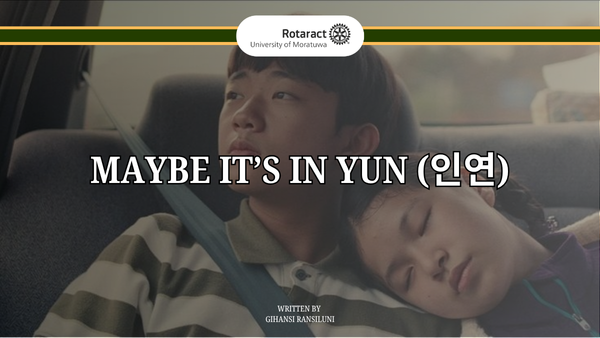
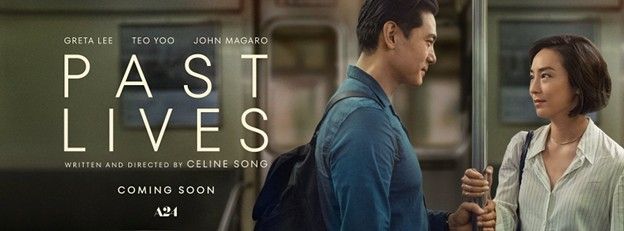
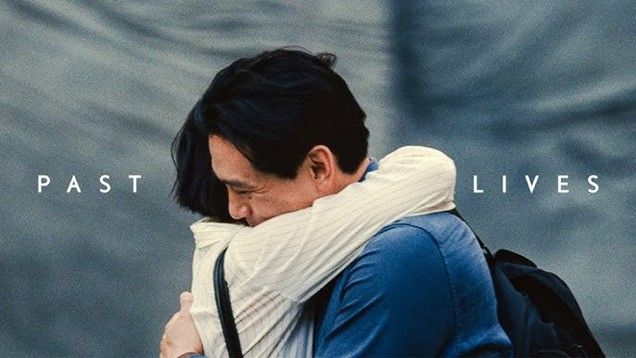
I first heard this word in the film Past Lives, and it hasn’t left me since… The film unfolds slowly, like memory, and In Yunbecomes its heartbeat, a reminder that some connections don’t just appear. So, In Yun means providence, or in simple words, it’s about the invisible thread that ties people together, the quiet pull that brings certain souls into our lives. But it’s not the kind of fate that controls destiny in a grand, dramatic way. In Yun is softer, quieter, almost invisible. It speaks of the connections between people like how even the briefest touch between two strangers, even just brushing sleeves on a street, means there must have been something between them in a past life.
As a Buddhist, I’ve grown up with the idea of past lives. That every action, every bond, every choice we make leaves traces that ripple forward. That the people we meet are not random, they’re echoes, continuations, maybe even answers to questions we don’t remember asking.
But even when I step outside the lens of religion, I can’t help but feel the truth of In Yun in the world around me.
Why do we sometimes feel drawn to someone we’ve just met like we already know them?
Why do certain faces feel strangely familiar, certain voices immediately comforting?
And why do we sometimes dislike people who’ve done nothing wrong to us?
Maybe it’s In Yun. Maybe it’s the leftover energy of unfinished stories, the love, the conflict, the kindness, the heartbreak. All carried quietly across time, meeting again in new forms.
Or maybe, it’s just a word we use to comfort ourselves when something feels too big, too mysterious to explain. Maybe In Yun is how we give meaning to coincidence. A gentle story we tell our hearts when logic can’t hold the feeling.
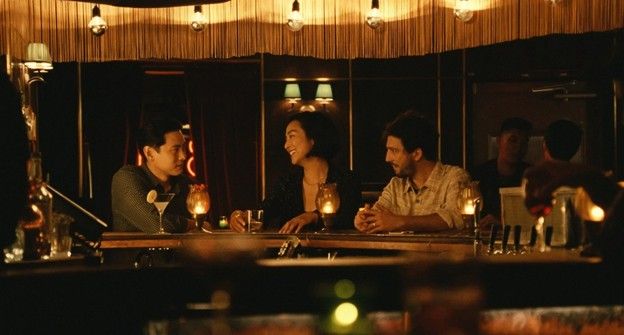
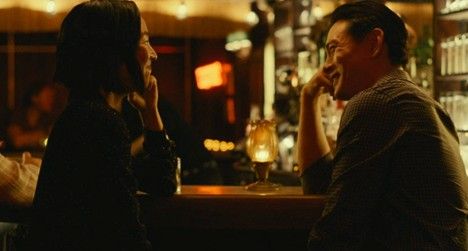
Past Lives captures that mystery with such tenderness. It doesn’t shout or explain, it simply shows. One of the most beautiful moments for me was the scene, where Nora, Hae Sung, and Arthur sit together in a bar. As Nora and Hae Sung begin to speak in Korean, the camera subtly cuts out Arthur. The frame narrows and suddenly it’s just the two of them, lost in a language, in a world, that only they can share. That small shift in framing says everything like how some bonds create their own space, invisible to everyone else.
And when I looked back, I realized the film had been whispering its ending from the very start.
When Nora and Hae Sung are children, walking home from school, they reach a point where they must part ways where she climbs the stairs, while he continues straight along the same road. It’s such a simple, ordinary scene, but now it feels like the entire film condensed into a single frame. where director quietly reveals the whole movie in just a single shot. Even then, they were always meant to walk together only for a while, before life, in its quiet inevitability, led them in different directions. The director had revealed the whole story right there, without saying a word.
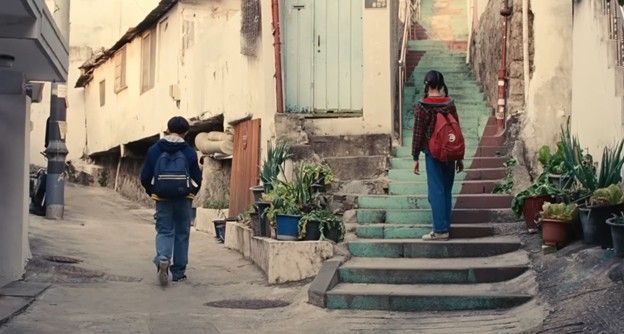
And then later, when Hae Sung says,
“You had to leave because you are you. And the reason I liked you is because you are you. And who you are is someone who leaves.”
That line stayed with me.
Is Nora a leaver? Or is she someone whose life has always been about moving…from one place to another, one version of herself to the next? Maybe leaving wasn’t about running away, but about growing, about becoming who she was meant to be.
She leaves not because she stops loving Hae Sung, but because her path simply leads elsewhere. They are from different timelines, shaped by different choices. The love between them is real, but so is the distance that life created. In the end, the film isn’t about loss — it’s about acceptance. About understanding that not every connection is meant to stay, but that doesn’t make it any less sacred.
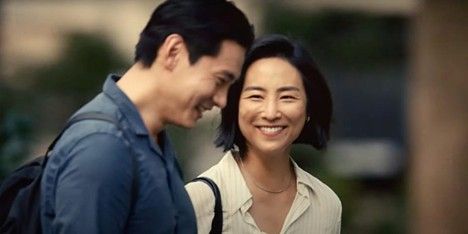
And maybe that’s what In Yun really means that the bond doesn’t end just because the story does. It lingers, quietly, waiting to find you again in another form, another lifetime, another brush of sleeves.
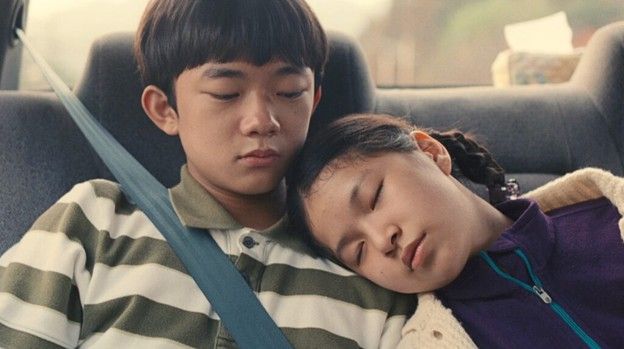
Because sometimes, love doesn’t mean holding on…it means recognizing someone’s place in your story, even if it isn’t beside you.And maybe that’s the hardest, most beautiful part of all,
to meet someone who feels like you’ve known them forever… and still have to let them go.
So maybe the question isn’t “Why did she leave?” but “What if she was never meant to stay, only to remind him that love, in some form, always returns?”
Or maybe just maybe… In Yun is the only way we know how to make peace with that.