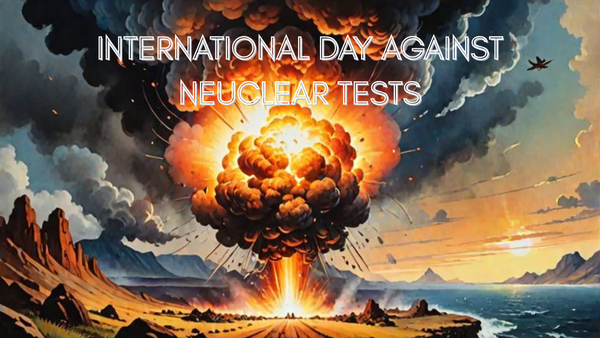
29 August – International Day Against Nuclear Tests
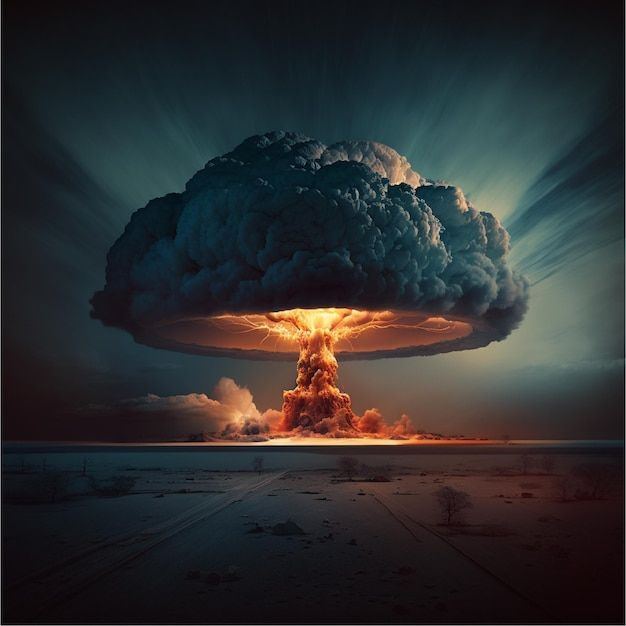
Three… Two… One… Silence or an explosion?
The choice lies in the hands of humanity.
It all began on a hot summer morning in July 1945. In the quiet desert of New Mexico. The world’s first nuclear bomb exploded. A flash of light that changed everything forever. That one moment sparked a terrifying race where countries hurried to build more and more nuclear weapons.
Over the next fifty years, more than 2,000 tests shook the earth, in deserts, deep underground, and across the oceans. Each explosion left deep wounds, not just on the land, but on animals, plants, and countless innocent lives. The world would never be the same again.
One of the most dangerous and heavily used testing sites was in Kazakhstan, called Semipalatinsk. It was a place where hundreds of nuclear explosions were carried out, affecting the health and lives of many nearby communities. In 1991, Kazakhstan made a brave and historic decision to close this site. It was a powerful step toward healing and hope.
This courageous step helped inspire the world to come together and push for a global agreement to ban nuclear testing altogether. This led to the creation of the Comprehensive Nuclear-Test-Ban Treaty (CTBT), opened for signature in 1996. The CTBT aims to stop all nuclear explosions whether they took place in the air, underwater, or underground and also to prevent the spread and modernization of nuclear weapons.
In 2009, the United Nations declared 29 August as the International Day Against Nuclear Tests, honoring Kazakhstan’s closure of Semipalatinsk and raising awareness about the devastating effects of nuclear explosions. This day calls on nations and people everywhere around the world to unite in working towards a world without nuclear tests and eventually, without nuclear weapons.
While many countries have signed and ratified the CTBT, the treaty has not yet entered into force because a few key nations still need to complete the process. This means the door remains slightly open for some to continue testing or threatening tests.
Nuclear testing may look different today, but it has never fully stopped. The risks remain real, the risk of environmental disaster, human suffering, and global instability.
That is why the International Day Against Nuclear Tests is so important. It is more than a date on the calendar. It is a call for everyone to raise their voices and push for stronger action. Only when every country closes the door on nuclear testing can we truly move toward lasting peace and security.
More than half of the world has already stepped away from nuclear weapons. This shows us it is possible to imagine a future free from nuclear threats. But that future needs all of us to choose it. Every day, every year, until nuclear weapons are history.Let us honor this day by renewing our commitment to that hopeful and safer world.
Written by: Yashmi Jayaweera